 |
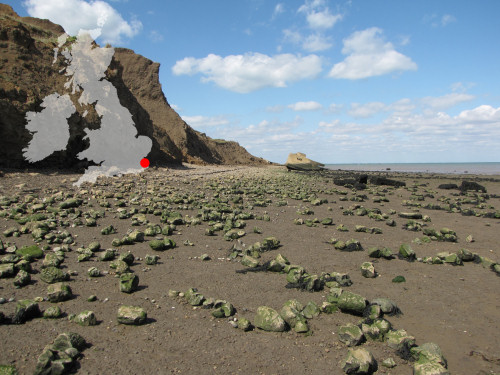
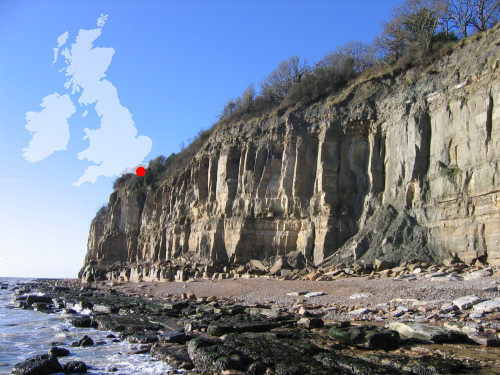
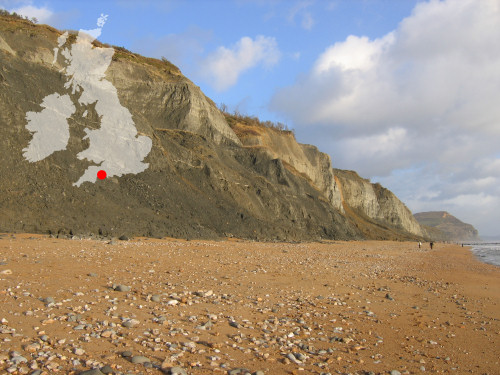
Barton on Sea (Hampshire) |
Eocene |
Summary: The fossils of the Barton Clay are
nothing less than spectacular. The highly fossiliferous Barton Clay
exposed in the cliff between Highcliffe and Barton on Sea provides
an opportunity to explore a prehistoric marine environment dating
from 40 million years ago.
Fossils: shark teeth, bivalves, gastropods...
|
|
Click here
to view details |
|
 |
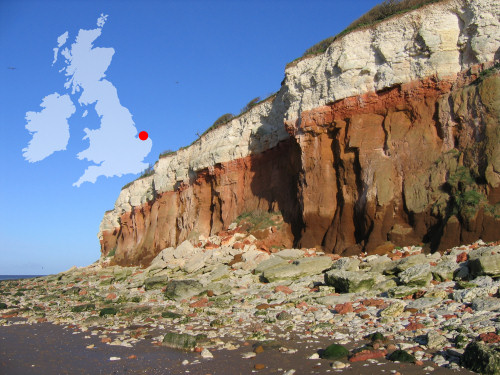
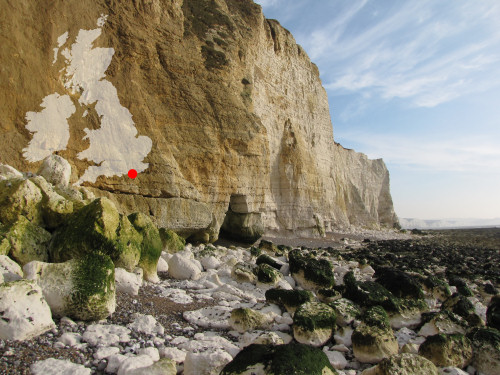
Beachy Head (East Sussex) |
Cretaceous |
Summary: The rocks and clays at Beachy Head record the
transition from shallow, near-shore conditions to deeper water and
the earliest associated chalks. Fossils occur commonly, in particular echinoids, sponges, bivalves, and other
benthic fauna that inhabited the prehistoric seafloor at the time.
Fossils: ammonites, nautili, echinoids,
bivalves, sponges...
|
|
Click here to view details |
|
 |
Bracklesham Bay (West Sussex) |
Eocene |
Summary: this is one of the best locations in
the UK to find Eocene fossils. The frequency and quality of finds is
excellent, especially after stormy weather. Bracklesham Bay is a
good location for all the family.
Fossils: shark teeth, other fish bones,
bivalves, gastropods...
|
|
Click here
to view details |
|
 |
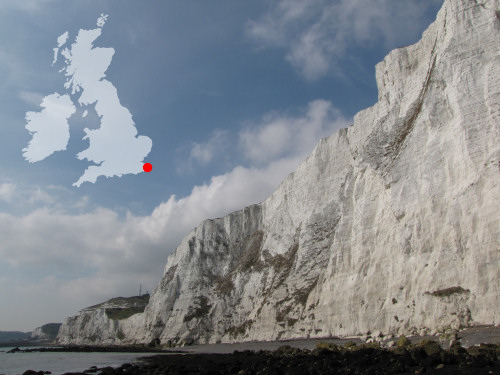
Dover (Kent) |
Cretaceous |
Summary: Dover is a classic fossil hunting
location, although best suited to experienced collectors and less so
for
families. The fossils are not readily found and those that are
require careful extraction to prevent damage.
Fossils: echinoids, bivalves, sponges, shark
teeth...
|
|
Click here
to view details |
|
 |
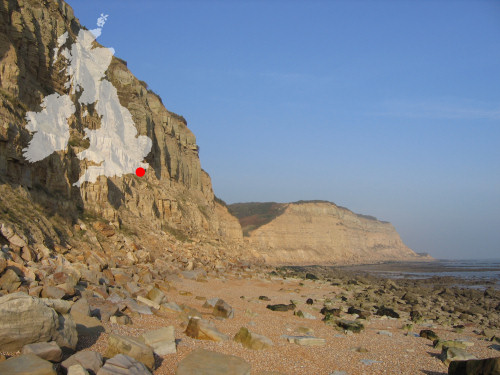
Fairlight (East Sussex) |
Cretaceous |
Summary: Fairlight and Hastings are two of a
limited number of UK locations where you can explore sediments laid
down above sea level during the Lower Cretaceous epoch. Despite the
low find frequency, Fairlight provides an understanding of what was
happening 140 million years ago.
Fossils: dinosaur footprints and bones,
bivalves, plant remains...
|
|
Click here
to view details |
|
 |
Folkestone (Kent) |
Cretaceous |
Summary: Folkestone is one of the best places
to find fossils on the south coast. This beach is easily accessible
and the volume and quality of fossils is hard to beat.
Fossils: ammonites, bivalves, belemnites, fish
and crab remains...
|
|
Click here
to view details |
|
 |
Hastings (East Sussex) |
Cretaceous |
Summary: Hastings and Fairlight are two of a
limited number of UK locations where you can explore sediments laid
down above sea level during the Lower Cretaceous epoch. Despite the
low find frequency, Hastings provides an understanding of what was
happening 140 million years ago.
Fossils: dinosaur footprints and bones,
bivalves, plant remains...
|
|
Click here
to view details |
|
 |
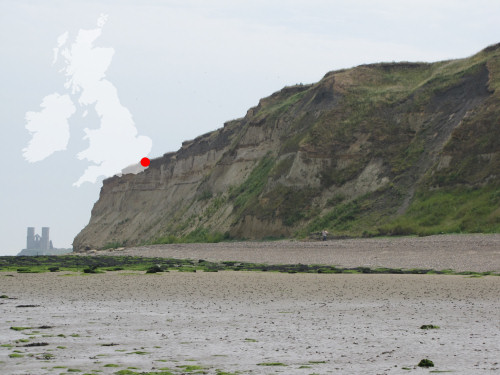
Herne Bay (Kent) |
Eocene |
Summary: The cliffs and foreshore provide an
opportunity to explore a prehistoric marine environment dating from
56-54 million years ago. Fossils occur commonly throughout the year
especially following stormy conditions when they can be found in
large numbers among the pebbles and clay on the foreshore.
Fossils: shark teeth, bivalves...
|
|
Click here
to view details |
|
 |
Littlehampton (West Sussex) |
Cretaceous |
Summary: The fossils at Littlehampton reveal
the variety of organisms living on the seabed 90-71 million years
ago. Among the more frequent finds include the internal flint moulds
of two irregular (bilaterally-symmetrical) echinoid genera - the
heart-shaped Micraster and the taller, oval-shaped
Echinocorys.
Fossils: echinoids, bivalves, sponges...
|
|
Click here
to view details |
|
 |
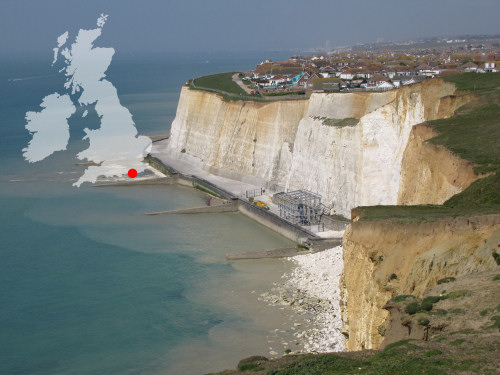
Peacehaven (East Sussex) |
Cretaceous |
Summary: Peacehaven is the best place to view
some of the largest ammonites in the world. Although fossil
collecting of these ammonites is prohibited, certain areas do allow
fossil collecting.
Fossils: ammonites, echinoids, bivalves,
sponges...
|
|
Click here
to view details |
|
 |
Warden Point (Isle of Sheppey, Kent) |
Eocene |
Summary: For centuries the eroding coastline
around Warden Point has provided one of the most productive areas
for the study and collection of fossils from the London Clay. Among
the finds include largely complete crustaceans, nautili, shark teeth
and bones, snake skeletons, bird skulls and a variety of land
sourced fruits.
Fossils: shark teeth, bivalves, gastropods,
crabs, lobsters...
|
|
Click here
to view details |
|

A Discovering Fossils advertisement

Advertisement

Advertisement

Advertisement